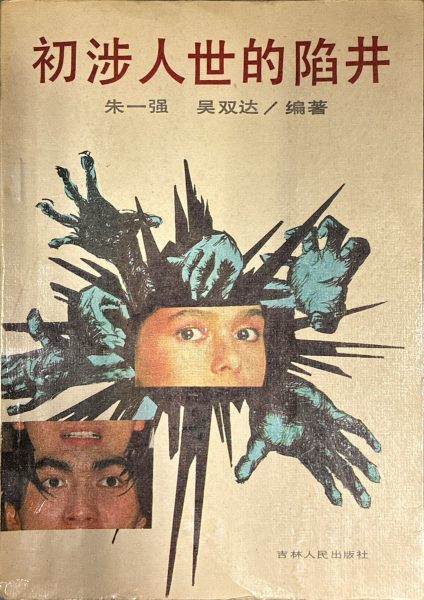
Snares of Youth: Juvenile Offenders and Popular Criminology in the Early Reform Era,
“Snares of Youth: Juvenile Offenders and Popular Criminology in the Early Reform Era,” Modern China 51, no. 5 (2025): 443–75.
This article examines popular narratives about juvenile offenders—their psychology, propensities, and reformation—in the context of legal popularization ( pufa 普法) in the early reform era. With the end of the Cultural Revolution (1966–1976), the Chinese Communist Party mobilized a series of anti-crime campaigns to combat high crime rates especially among youth—but with only short-term success. In 1985, the party officially circulated a five-year plan to disseminate “common legal knowledge,” which, among other things, encouraged the production of works that featured fictional and true crime narratives. This article discusses two such works—the award-winning film Juvenile Offenders 少年犯 (1985) and the true crime anthology Snares upon First Venturing into the World 初涉人世的陷阱 (1988)—as emblematic of popular criminological discourses on troubled youth during this period. Both works insisted on the law and legal knowledge as rational safeguards against the “poisons” of the Cultural Revolution and the irrational impulses and aberrant psychological complexes behind juvenile criminality. At the same time, they continued to utilize the Mao-era paradigm of the party as a surrogate parent and promoted stories of wayward children who were rehabilitated through the love and care of dedicated adults. In these ways, popular criminology of the early reform era comprised heterogeneous discourses that ultimately cast a shadow over the principal claims of pufa : the curative effects of legal knowledge and the law’s scientific objectivity.Tony D. Qian