The Good, the Bad, the Weird Revisited: On Visual-Verbal Disjunction and the Specter of the Unknowable Subject
“The Good, the Bad, the Weird Revisited: On Visual-Verbal Disjunction and the Specter of the Unknowable Subject.” Journal of International Culture 18.1: 473-505. (June 2025)
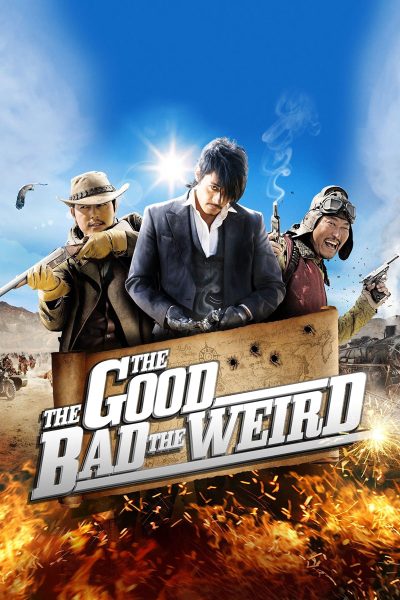
This article analyzes Kim Jee-woon’s The Good, the Bad, the Weird to explore previously underexamined aspects of the film and reconsider its critical implications through a comparative study with Sergio Leone’s The Good, the Bad and the Ugly. It demonstrates how the film spatializes Manchuria through a dynamic of verbal anchoring and visual obfuscation, with the resulting disjunction between word and sight propelling the audience from the mid-1930s to the late 1930s. Challenging the prevailing critical consensus on the protagonists’ moral ambiguity, the article shows how Kim’s Manchurian Western reclaims a sense of moral legibility by both rewriting the Spaghetti Western’s moral indeterminacy and eschewing Hollywood’s good-versus-evil binary. In addition, an analysis of extended action sequences underscores how the protagonists’ invincibility gives rise to a heightened sense of agency, despite their colonial and migrant status. The essay further explores how the visible yet unnamed treasure, as an inverse form of visual-verbal disjunction, exposes the structural constraints on the protagonists’ agency. Finally, whereas earlier scholarship construed the treasure as the film’s central narrative void, this study contends that the true void lies in the protagonist’s unspoken dreamㄧan absence that resists interpretive closure with respect to his existential core, whether ideological or otherwise.